
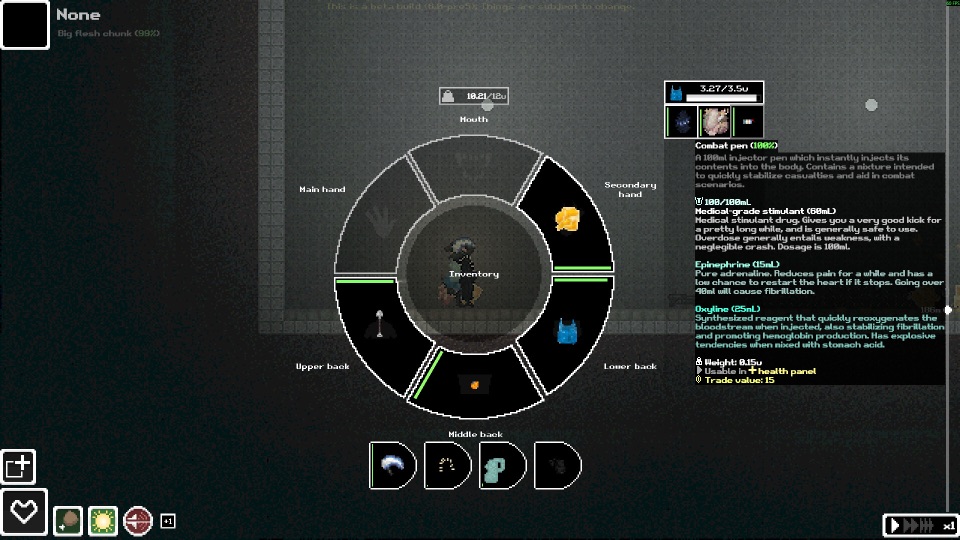
Official Steam screenshot · Game imagery © respective owners. Material credits.
Separate moodles from the mood value
Moodles are the condition or status indicators used to communicate what is happening to your character. Mood is a different part of the survival simulation, even though the two words look similar in player discussions. When asking for help, name the specific warning shown by the interface rather than saying only that your character has a bad mood.
That distinction prevents two different problems from being collapsed into one vague description. A neurological condition needs to be read alongside the health systems that support the brain, while a reference to mood concerns another displayed value. Start by identifying the exact label so that advice about a status icon does not accidentally become advice for an unrelated mental-state mechanic.
Recognize the neurological warning labels
The developer-owned English file contains the labels Cognitive Impairment and Neurological Damage. It also includes Severe Neurophysiological Deterioration and Comatose. The supplied community moodle and brain-health references describe the same progression, making those names useful terms to recognize and to include when describing the problem to another player.
The names communicate different neurological states without giving you a complete treatment plan by themselves. A more severe label is a reason to inspect the character’s wider condition rather than searching only for the icon’s appearance. Read the current wording in the game, because a screenshot from a different version can omit the circumstances that produced that warning.
Check the supply of oxygenated blood
The tutorial explicitly connects the brain with a sufficient supply of circulating, oxygenated blood. That relationship gives a stronger starting point than assuming a brain warning always identifies a single isolated injury. Consider the systems that provide that supply when you read the warning, rather than treating brain health as a number disconnected from the rest of the character.
Inspect oxygen and breathing warnings alongside bleeding and heart-related warnings. A worsening neurological state can accompany a problem elsewhere in that chain, so looking only at the brain-health display can leave important context out. The useful question is what the interface reports across those related systems at the same time, not which icon happens to attract your attention first.
Read bleeding and circulation warnings together
Bleeding is relevant because circulation is part of the brain’s support system described by the tutorial. External wound care, internal bleeding and other injury categories remain distinct even when they occur in the same run. Check which condition is actually being reported before assuming that an ordinary Dressing will address every reason your character is deteriorating.
Ordinary Dressing slows bleeding and supports skin and fracture recovery, but its item description does not make it a universal neurological treatment. Internal bleeding has its own tooltip, and muscle damage is also separate from what ordinary wrapping restores. Use those distinctions to read the panel more carefully instead of treating any medical item as a guaranteed answer to any brain-health warning.
Describe the whole condition when seeking help
When comparing your situation with a guide or community answer, begin with the neurological label you can actually see. Add the oxygen, breathing, blood-loss or heart warnings that appear alongside it. This makes the question specific enough to distinguish a shared symptom from a shared cause, rather than assuming that two players with the same icon necessarily have identical problems.
Include the build and whether you are playing the demo or another version. The supplied research identifies the brain-health community page as unfinished, and the September developer notes mention release changes to brain-damage balance. Those details make version context particularly important when a reply offers exact cutoff percentages or recovery expectations that are not present in the checked tutorial wording.
Use the warning system without relying on an unverified cure table
The checked sources establish the status names and the connection between brain function, oxygen and circulation. They do not establish a universal set of thresholds, regeneration rates or guaranteed drug outcomes for every build. Recognizing that boundary keeps the warning guide useful without turning an unfinished community table into a promise about how your current character will recover.
The practical sequence is to identify the label, inspect the related systems and read the game’s item and condition descriptions before acting. For wound care, use the separate Dressing instructions rather than assuming a wrap repairs muscle or reverses every neurological condition. For version-sensitive figures, match the source to the build instead of carrying numbers from an older discussion into a different release.
Read a neurological warning as part of a connected panel
When a brain-health moodle appears, start with its exact displayed label and then inspect the adjacent health information. The tutorial’s oxygenated-blood explanation gives you a reason to look at circulation and breathing rather than choosing a response from the neurological icon alone. This is a reading strategy grounded in the documented systems, not a claim that every case has the same cause or that the warning itself identifies a guaranteed cure.
Keep the sequence of observations clear when describing the situation to another player. A report that includes blood loss, breathing or heart warnings alongside Cognitive Impairment communicates more useful context than one that only calls the character unhappy. It also avoids confusing the distinct mood value with the condition indicators, a terminology problem that can send a discussion toward the wrong survival system before anyone examines the actual warning.
Compare any suggested action with the game’s description of the relevant item or condition. A Dressing’s external-wound role, for example, does not establish that it restores muscle health or resolves every circulation-related problem. The checked research supports careful interpretation of these connections while leaving exact thresholds and recovery promises outside the guide, particularly because the community brain-health reference is unfinished and release balance was announced to change.
Keep a status-name reference separate from a numeric threshold
The checked developer text is useful for identifying the wording of a neurological warning. Recognizing that wording does not establish the exact percentage at which every build displays it. Keep the label and the source context together when comparing your panel with a community explanation.
The September notes describe release changes to brain-damage balance. That makes a version-specific comparison important even when the same familiar label appears in two discussions. Use the oxygen and circulation relationship as the documented context, while leaving unsupported recovery rates and cutoff values out of your expectations.
Sources and version context
This guide uses research checked on November 8, 2026. Demo instructions, announced release content and community projects retain their separate version context. Follow the linked developer or project documentation for the source of each release or installation claim.